
U.S. Election Prediction & Odds 2028: Newsom vs. Vance


They may still be cleaning up confetti from the Super Bowl, but attention is already shifting among those watching political prediction markets. The U.S. is officially in a midterm election year, and the 2028 U.S. presidential election prediction markets are already beginning to move.
As President Donald Trump continues his second term, potential successors and challengers are seeing their odds fluctuate. With the possibility of a Democratic surge in November, we break down early 2028 U.S. election predictions and what those signals may indicate for the candidates involved.
🗳️ Who will win the 2028 U.S. election?
Before we make a prediction, let's take a look at where the percentage chances stand in the U.S. presidential election odds for 2028 here early in 2026, and just over a year into Donald Trump's second (non-consecutive) term.
Prediction market via Kalshi. You can use our Kalshi promo code for a $10 bonus by signing up today. Market subject to change.
The road to voting day on Nov. 7, 2028, is a long one in many ways, but also a potentially short one in the political realm, and already these percentages lead to several key questions as we look ahead.
🐘 Is Vance in trouble already? Current market sentiment
Vance, who's the Republican presidential nominee odds leader, has been considered the 2028 front-runner since the moment odds emerged. Or, really, since when he was named Vice President, as Trump's second term will be his last.
It was therefore prudent to select the Vice President best able to carry on the Make America Great Again movement that started when Trump descended that golden escalator so many years ago. Vance is thought of as the heir while supporting the same message, though with usually a more politically polished tone.
But as we see in the odds, he's fallen gradually from his peak. Vance sat as high as 32.9% to win the presidency in early July, and now he's down to 25%. That's not far above Newsom, the front-runner in the Democratic presidential nominee odds, who sits at 20%.

The Vice President is largely tied to the policies and actions of the president. Trump's approval rating sits at just 41%, according to The New York Times, which is tied for the lowest of his second term. For perspective, his predecessor Joe Biden infamously struggled toward the end of his only term, and he sat around the same approval rating after one year.
Vance has also spoken out strongly in support of ICE amid the actions in Minneapolis. A recent Ipsos poll shows that 62% of Americans believe current ICE efforts to deal with immigration have gone too far.
🚀 Will Rubio keep rising?
The threat from Newsom and the Democrats will loom larger for Vance, especially if there's a blue wave during the midterms this fall, as many expect. However, there's a growing threat from within, too.
Marco Rubio's profile keeps ascending as Vance stumbles. He holds two massively consequential positions as the Secretary of State and a National Security Advisor, and Rubio has been trust into the spotlight more amid negotiations over Greenland and the United States' involvement in Venezuela.
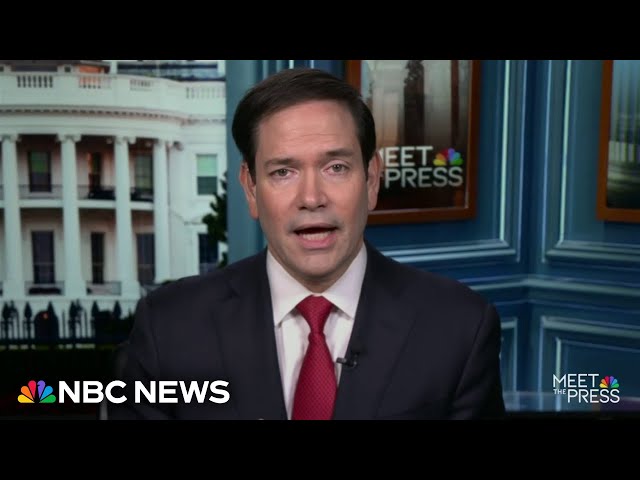
He sat at just a 3.5% chance as recently as late this past October, and Rubio has since risen sharply to nearly 11%, all as Vance drifts back in his direction. It seems a faceoff could be brewing down the road between the two.
For his part, Trump is sitting on the fence while calling both "fantastic," though he added that he'll "be inclined" to endorse a candidate when the time comes, according to The Hill.
🫏 Can Newsom defeat Vance?
Like his possible opponent on the other side, Newsom has fallen since reaching a high point in early November, when he was getting a 37.1% chance to win the the Democractic presidential nomination in 2028.
Still, the 31.6% he rests at now is far above any rivals in his own party, with Kamala Harris and Alexandria Ocasio-Cortez far down at 8%. Newsom has been positioning himself as the chief critic of Trump for some time, and being the main figurehead from a highly populated blue state as the Governor of California certainly helps in the effort to gain traction.
His hiccup could be that in the past he hasn't been great on the debate stage, most notably producing a mediocre effort against Ron DeSantis back in 2023.
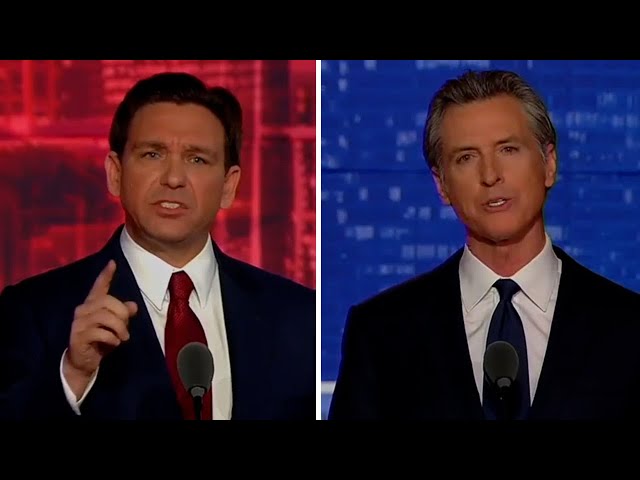
But simply getting those reps under a bright spotlight will be highly beneficial ahead of likely facing similar circumstances during the Democratic primaries, and again in the general election campaign if he's chosen to run.
The road is long and winding, but for now the nomination could be his to lose, and his public perception would likely skyrocket further if the Democrats steamroll during the midterms.
🇺🇸 U.S presidential election prediction for 2028
The party in power traditionally struggles during the midterms, and the prediction market from Kalshi shows that remains the likely destiny for Republicans.
What's even more alarming for Republicans and their fate in the midterms, and perhaps also the general election, is what happened during a recent special election in Texas, of all places.
Democrat Taylor Rehmet took a Fort Worth-area district by a whopping 14 points, and it was the same area where Trump tallied a resounding 17-point triumph in the 2024 election.
It'll get late early for Trump in this term if the Democrats maintain that kind of dominance, and if the Republican in-rfghting that's seen Marjorie Taylor-Greene become a Trump critic continues well into the president's lame-duck period.
The runway is clear for Newsom. Now he needs to keep lifting off.
Prediction: Newsom wins presidency in 2028
📰 U.S politics updates
- Will Donald Trump be impeached?
- Will Donald Trump invade Greenland?
- Will Donald Trump invade Venezuela?
🔀 Kalshi explainer: How prediction markets work for the 2028 U.S. presidential election
Kalshi is a U.S.-regulated prediction market exchange where users trade on real-world outcomes, including U.S. political events. One of the most followed political offerings is the U.S. election market for 2028.
These markets focus on a simple question: Who will become the next president? Contracts are tied to named candidates, with outcomes settled based on the winner of the general election.
Prices are displayed in cents and function as implied probabilities, updating continuously as new information enters the market.
How do prices work?
- Prices range from 1 cent to 99 cents
- A 40-cent contract implies a 40% chance based on market consensus
- If the candidate becomes the nominee, the contract settles at $1
- If not, it settles at $0
Prices move as participants react to polling changes, endorsements, fundraising disclosures, debate performances, and candidate exits.
Can positions be exited early?
Yes. Contracts can typically be sold before the nomination is decided. That flexibility allows participants to respond to breaking news or shifts in momentum rather than holding a position until the final outcome.
How is Kalshi different from sportsbooks?
Kalshi operates as an exchange, not a house. Participants trade directly with each other, and prices are set by supply and demand instead of fixed odds.
Key distinctions include:
- Probabilities shown in cents rather than traditional odds
- Focus on real-world outcomes, not margins or spreads
- Ability to adjust or close positions before resolution
For political markets, success depends on interpreting information flow rather than predicting performance on a field.
Is Kalshi regulated?
Yes. Kalshi is regulated by the Commodity Futures Trading Commission. Market rules, settlement criteria, and contract definitions are published in advance.
🆚 What sports fans need to know about politcal prediction markets
If you are used to tracking championship futures, presidential markets are not that different.
Instead of asking which team wins it all, the market is asking which candidate survives a long, multi-stage process and wins the presidency. Prices move the same way futures prices do, reacting to momentum, injuries - here replaced by scandals or dropouts - and changes in public perception.
A candidate trading at 30 cents is essentially the market saying, “Right now, this person has about a one-in-three shot.” If that candidate lands key endorsements or posts strong polling numbers, the price can move quickly.
What makes presidential markets especially interesting is the timeline. This is not a one-night event. It is months of news cycles, debates, fundraising reports, and strategic decisions. That gives participants time to think, react, and reassess as the race evolves.
For sports fans who already understand probabilities and market movement, political prediction markets feel familiar. The scoreboard is just different.
📃 Affiliate disclosure
Sportsbook Review may receive a commission if you sign up through our links. Not intended for use in MA. Bonuses not applicable in Ontario. 21+ only. (Gambling problem? Call 1-800-GAMBLER)

Related Articles


