
Democratic Presidential Nominee Odds 2028: Newsom Far Out in Front as Favorite


As we look at the Democratic presidential nominee odds for 2028, never forget that two-and-a-half years isn't a long time in the political realm, especially when we're dealing with an eventual lame-duck president on the other side.
For now, Donald Trump is getting many of his key policies passed, including the most contentious ones. But we're beginning to see the start of a fracturing within his own party, and that will likely grow further if Democrats dominate the midterm elections this fall.
After that the intensity truly ratchets up as the party builds toward trying to win the U.S. presidential election odds 2028.
🫏 Democratic presidential odds 2028
Prediction market via Kalshi. You can use our Kalshi promo code for a $10 bonus by signing up today. Market subject to change.
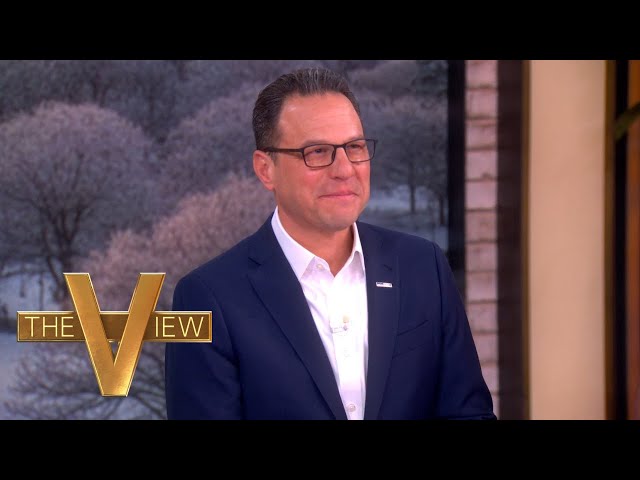
Gavin Newsom holds a colossal lead while trading at 32 cents for "yes" through Kalshi, which translates to +213 odds. He's miles ahead of Josh Shapiro and Alexandria Ocasio-Cortez, who are both receiving +1150 odds.
Here's the full top 10 and their percentage chances, and the conversion to odds.
| Candidate | Implied chance | Yes | No |
|---|---|---|---|
| Gavin Newsom | 32% | +213 | -223 |
| Josh Shapiro | 8% | +1150 | -1329 |
| Alexandria Ocasio-Cortez | 8% | +1150 | -1329 |
| Kamala Harris | 6% | +1329 | -1567 |
| Pete Buttigieg | 5% | +1900 | -2400 |
| Andy Beshear | 5% | +1900 | -2400 |
| Gretchen Whitmer | 4% | +2400 | -3233 |
| J.B. Pritzker | 4% | +2400 | -3233 |
| Mark Kelly | 5% | +1900 | -2400 |
| Jon Ossoff | 5% | +1900 | -2400 |
🗳️ Democratic presidential nominee odds analysis
Last spring isn't long ago in the time frame of politics and the buildup to a potential presidential campaign. And specifically, late April was an interesting time for the Democrats and this prediction market.
The party was still in the process of picking up the pieces after allowing Donald Trump and the Republicans to regain office in 2024. And on April 24 there was nearly no separation between Newsom, Shapiro, and Ocasio-Cortez in this market, with the Governor of California holding a narrow lead at 12.7%, AOC just behind at 11.2%, and the Governor of Pennsylvania at 10%.
But Newsom rose to 20% come mid-August before peaking at 37.1% in November and then leveling off a bit to where he is now. That thrust is surely tied to Newsom continuing to be one of the most vocal public faces opposing Trump during the president's second term.
Shapiro announcing his reelection campaign to remain Pennsylvania's governor is no doubt a factor too, as is his focus on midterms that are widely expected to bring success for Democrats. Shapiro has said he'll be on the ballot and "helping others."
📰 U.S politics updates
- Will Donald Trump be impeached?
- Will Donald Trump invade Greenland?
- Will Donald Trump invade Venezuela?
❓Democratic presidential odds 2028 FAQ
Who is favored to win the Democratic nomination?
Gavin Newsom is the overwhelming favorite while getting a 32% chance, which leads to +212 odds.
Who was the last Democratic nominee?
Kamala Harris took over for Joe Biden ahead of the 2024 election. She lost to Donald Trump.
When is the Democratic National Convention?
There is no date set yet for the 2028 Democratic National Convention. The last two events have been held in mid-August of the election year.
When will the 2028 presidential election be decided?
The next day Americans will go to the polls to vote for a president is Nov. 7, 2028.
How to watch the U.S. presidential election
Every major news outlet will cover the 2028 United States presidential election extensively.
🔀 Kalshi explainer: How party nominee prediction markets work for the 2028 U.S. presidential election
Kalshi is a U.S.-regulated prediction market exchange where users trade on real-world outcomes, including U.S. political events. One of the most followed political offerings is the party nominee market for the 2028 U.S. presidential election.
These markets focus on a simple question: Who will officially become a party’s nominee? Contracts are tied to named candidates, with outcomes settled based on formal party certification at the conclusion of the nomination process.
Prices are displayed in cents and function as implied probabilities, updating continuously as new information enters the market.
2028 party nominee markets on Kalshi
What does a party nominee market measure?
A party nominee market measures whether a specific individual becomes the official Democratic or Republican nominee for president in 2028.
The contract language defines the outcome clearly, and settlement is based on objective, verifiable events such as party conventions or official party announcements.
How do prices work?
- Prices range from 1 cent to 99 cents
- A 40-cent contract implies a 40% chance based on market consensus
- If the candidate becomes the nominee, the contract settles at $1
- If not, it settles at $0
Prices move as participants react to polling changes, endorsements, fundraising disclosures, debate performances, and candidate exits.
Can positions be exited early?
Yes. Contracts can typically be sold before the nomination is decided. That flexibility allows participants to respond to breaking news or shifts in momentum rather than holding a position until the final outcome.
How is Kalshi different from sportsbooks?
Kalshi operates as an exchange, not a house. Participants trade directly with each other, and prices are set by supply and demand instead of fixed odds.
Key distinctions include:
- Probabilities shown in cents rather than traditional odds
- Focus on real-world outcomes, not margins or spreads
- Ability to adjust or close positions before resolution
For political markets, success depends on interpreting information flow rather than predicting performance on a field.
Is Kalshi regulated?
Yes. Kalshi is regulated by the Commodity Futures Trading Commission. Market rules, settlement criteria, and contract definitions are published in advance.
🆚 What sports fans need to know about politcal prediction markets
If you are used to tracking championship futures, party nominee markets are not that different.
Instead of asking which team wins it all, the market is asking which candidate survives a long, multi-stage process and ends up as the official nominee. Prices move the same way futures prices do, reacting to momentum, injuries - here replaced by scandals or dropouts - and changes in public perception.
A candidate trading at 30 cents is essentially the market saying, “Right now, this person has about a one-in-three shot.” If that candidate lands key endorsements or posts strong polling numbers, the price can move quickly.
What makes nominee markets especially interesting is the timeline. This is not a one-night event. It is months of news cycles, debates, fundraising reports, and strategic decisions. That gives participants time to think, react, and reassess as the race evolves.
For sports fans who already understand probabilities and market movement, political prediction markets feel familiar. The scoreboard is just different.
📃 Affiliate disclosure
Sportsbook Review may receive a commission if you sign up through our links. Not intended for use in MA. Bonuses not applicable in Ontario. 21+ only. (Gambling problem? Call 1-800-GAMBLER)

Related Articles


