
⚽ World Cup Altitude: How to Bet Mexico's Mile-High Advantage as Host Nation


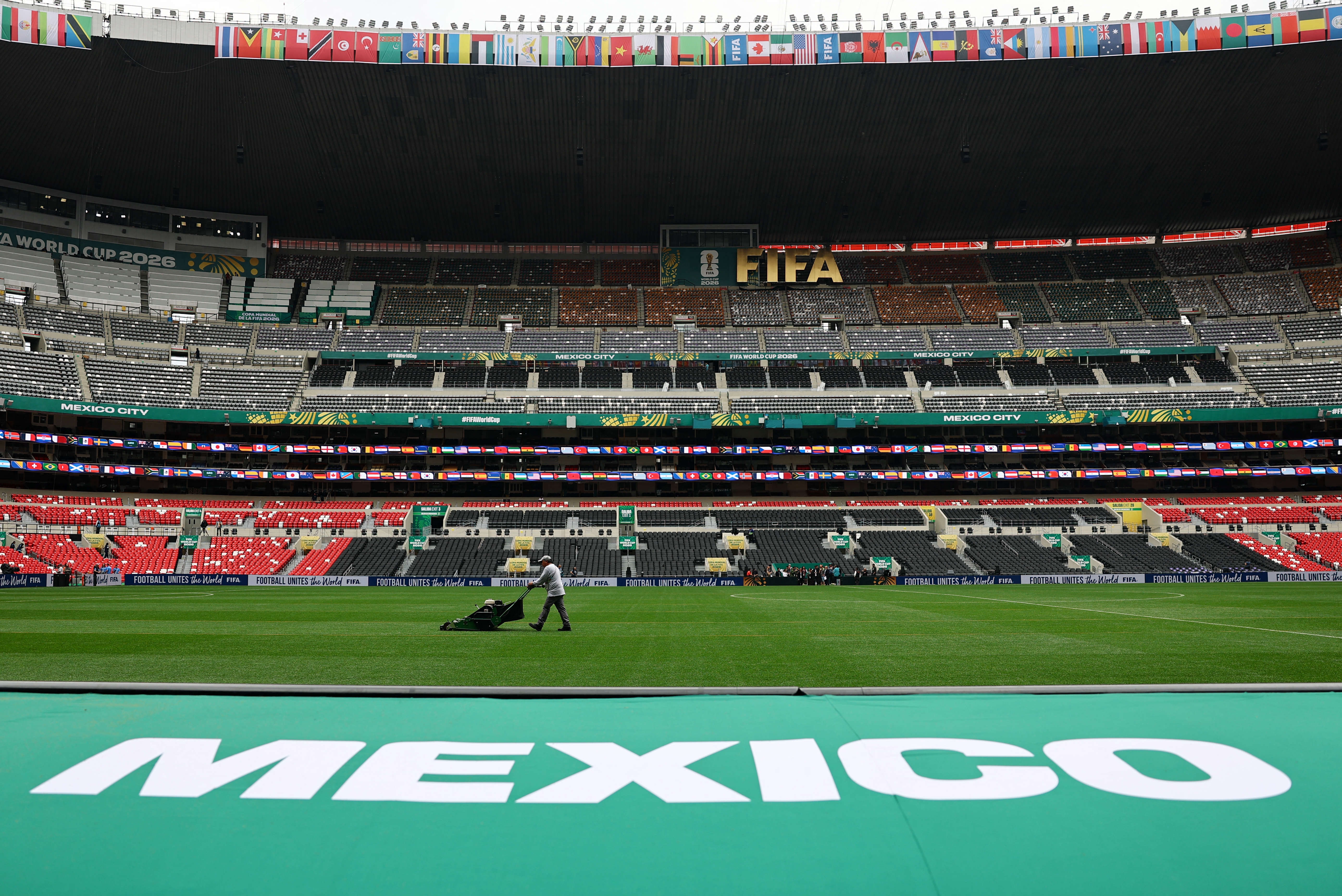
For the third time in World Cup history, Mexico will play host to the global soccer tournament (alongside the United States and Canada) starting with today's match against South Africa (3 p.m. ET, FOX) at Estadio Azteca in Mexico City.
That presents a major advantage for the host nation playing in a stadium that sits 2,200 meters (7,200 feet) above sea level - one that has historically carried Mexico further in this tournament on home soil and should benefit other teams acclimated to high elevation, too. Below, I break down everything you need to know about how to bet on World Cup altitude and whether you should back Mexico to win the entire tournament.
⛰️ How does altitude affect soccer players?
As we broke down in our NFL Fatigue Index last summer, altitude can have a major effect on athletes' oxygen delivery and muscular endurance even well after the game ends with studies showing a 20-25% reduction in recovery rate when playing at elevation.
One study of the 2010 World Cup found that teams covered roughly 3% less ground at altitude with minor effects showing up above 500 meters (1,640 feet) and significant issues with aerobic capacity and fatigue beyond 1,500 meters (5,000 feet). That tracks with another study from the British Journal of Sports Medicine that found every 1,000 meters of altitude difference was worth about half a goal against unacclimated teams.
That's why FIFA took action to (briefly) ban matches above 2,500 meters in 2007, eventually softening that to require a week of acclimation at that elevation and two weeks above 3,000 meters. That's the most effective way for visiting teams to combat the ill effects of elevation: while it can take up to three weeks to fully adjust, athletes can prepare their bodies within 1-2 weeks of proper training at high altitude, which is the route most teams have taken this summer.
Only two of the 16 host venues for World Cup 2026 clear the bar for altitude effects: Estadio Azteca in Mexico City (2,200 meters / 7,200 feet) and Estadio Akron in Guadalajara (1,566 meters / 5,138 feet). The next-highest stadium at Monterrey sits near 540 meters, so the entire concern around altitude centers around those first two venues.
↕️ Which World Cup teams are most affected by altitude?
Only nine teams are guaranteed to play a match at relevant altitude with a handful of other squads facing a narrow chance to play one or two matches in the knockout rounds. Only four of those nine squads chose a base camp at a high enough elevation to properly acclimate ahead of the group stage, while the other five are rolling the dice.
Which teams are acclimated to altitude?
Here's a look at the nine teams that are set to play at least one game at extreme altitude during World Cup 2026, ranked by the elevation of their base camp:
| Team | Base camp | Altitude (meters) |
|---|---|---|
| Colombia | Bogotá → Guadalajara | 2,640m |
| South Africa | Pachuca | 2,432m |
| Mexico | Mexico City (home) | 2,200m |
| South Korea | Guadalajara | 1,566m |
| Uzbekistan | Marietta, Ga. | 344m |
| Spain | Chattanooga, Tenn. | 206m |
| Czechia | Mansfield, Texas | 180m |
| DR Congo | Houston | 15m |
| Uruguay | Playa del Carmen | 10m |
Two of the four teams on this list (Mexico and South Korea) are training at the exact altitude that they'll face in their highest elevation game, which should leave them fully acclimated for the entire tournament. That's also the case for Colombia, which trained at a pre-tournament base camp in Bogotá - which has an even higher elevation than Mexico City - before heading to Guadalajara in the weeks before the group stage.
The other five teams on this list opted against any sort of altitude training and plan to fly into either Mexico City or Guadalajara at the last minute, which is the other way to combating the effects of altitude. Historically, that's been the inferior approach, and the teams that have trained properly this month should have an advantage at elevation.
Which matchups have the biggest altitude gap?
While it's tricky to perfectly quantify the advantage that teams will have at elevation, it's helpful to know which matchups have the biggest mismatch in altitude prep - especially with so many headlines misrepresenting which teams are actually prepared.
Here's a look at every matchup currently scheduled to be played at either Estadio Azteca in Mexico City or Estadio Akron in Guadalajara, along with the altitude gap in each side's official base camp (not their home country) after weeks of acclimation for every team:
| Date | Venue | Matchup | Altitude gap |
|---|---|---|---|
| June 11 | Mexico City (2,200m) | Mexico (2,200m) vs. South Africa (2,432m) | N/A |
| June 11 | Guadalajara (1,566m) | South Korea (1,566m) vs. Czechia (180m) | South Korea (+1,386m) |
| June 17 | Mexico City (2,200m) | Colombia (2,640m) vs. Uzbekistan (344m) | Colombia (+1,856m) |
| June 18 | Guadalajara (1,566m) | Mexico (2,200m) vs. South Korea (1,566m) | N/A |
| June 23 | Guadalajara (1,566m) | Colombia (2,640m) vs. DR Congo (15m) | Colombia (+1,551m) |
| June 24 | Mexico City (2,200m) | Mexico (2,200m) vs. Czechia (180m) | Mexico (+1,980m) |
| June 26 | Guadalajara (1,566m) | Spain (206m) vs. Uruguay (10m) | Spain (+196m) |
Mexico clearly emerges as a big winner when it comes to altitude prep (more on that below), but it's not because of today's opener, which many have circled as a massive advantage for the hosts. Since South Africa has been training in Pachuca - which actually has a higher elevation than Mexico City - that game is a wash. It's the one against Czechia two weeks later where we should really see an edge for the host nation.
That one would likely go Mexico's way regardless of elevation, though. Where we could really see the effects of altitude influencing the final outcome is on June 17 when a well-adjusted Colombian side takes on Uzbekistan in a game that could very well decide the Group K runner-up behind heavy favorite Portugal.
Which teams benefit most from altitude?
While Mexico has the most matches at elevation, Colombia is the real winner when it comes to raw cumulative margin over the opponent. Here's a look at all nine teams ranked by net differential in altitude prep across confirmed matchups:
| Team | Altitude matches | Net altitude (meters) |
|---|---|---|
| Colombia | 2 | +3,407m |
| Mexico | 3 | +1,980m |
| South Korea | 2 | +1,386m |
| Spain | 1 | +196m |
| South Africa | 1 | 0m |
| Uruguay | 1 | -196m |
| DR Congo | 1 | -1,551m |
| Uzbekistan | 1 | -1,856m |
| Czechia | 2 | -3,366m |
Thanks to that massive mismatch against Uzbekistan, Colombia clocks in at No. 1 in net altitude advantage after spending weeks training at elevation between Bogotá and Guadalajara. Mexico has the most durable advantage across the entire tournament, though, playing three matches at altitude plus two more possible if it wins Group A.
If you were thinking of betting on Czechia entering this tournament, you may want to reconsider given the national team's decision to opt against any sort of altitude training before playing two of the most well-adjusted teams in the field.
🇲🇽 Does Mexico have home-field advantage at World Cup?
Follow all of our expert soccer betting analysis for the 2026 World Cup.
If you only account for the effects of altitude, Mexico clearly benefits from hosting the World Cup this summer; it'll be fully acclimated for all three of its group stage matches before potentially hosting two more at Estadio Azteca in the knockout rounds.
Historically, that's been a major advantage for Mexico as a host nation, which has only happened twice before in 1970 and 1986. Both times, El Tri finished in the quarterfinals after going 2-0-1 at Estadio Azteca and losing its first (and only) game at another venue:
| World Cup | Host country | Final round |
|---|---|---|
| 1970 | Mexico | Quarterfinals (lost to Italy) |
| 1978 | Argentina | Group stage |
| 1986 | Mexico | Quarterfinals (lost to West Germany) |
| 1994-2018 | Multiple | Round of 16 |
| 2022 | Qatar | Group stage |
Mexico has a strong history on the world stage, finishing in the Round of 16 for seven straight tournaments following those two quarterfinal runs before a group stage exit last time out, but it's hard to ignore the clear boost for the host nation in 1970 and 1986.
It's not just at the World Cup against mid-tier competition, either. Mexico beat Brazil in a 4-3 final at Estadio Azteca to win the 1999 Confederations Cup, still the only CONCACAF nation to win an official FIFA tournament. We could see another deep FIFA run if the hosts can emerge from Group A and secure home-field advantage through the Round of 16.
💰 Should you bet Mexico to win the World Cup?
See all of our experts' soccer picks and the latest World Cup odds and favorites.
If you want to profit off Mexico's home-field advantage in World Cup 2026, you have to make a clear distinction: are you betting on El Tri or Estadio Azteca?
If you just want to bet on the effects of the stadium itself, that's easy: back the more acclimated team in the four games where one side has a clear advantage. If you specifically want to bet on Mexico's home-field advantage, there's a ceiling to that bet - the hosts will only play at Azteca through the group stage and possibly in the Round of 32 and Round of 16, but only if they win Group A.
To me, that's the single-best way to handicap the altitude effects of this tournament. Mexico has a squad capable of making a deep run but likely only with the extra assist from its home venue, so that's why I'd be looking to bet Mexico to win Group A (-125 via Caesars) with a more aggressive bet on Mexico to reach the quarterfinals (+350 via bet365) if it can sweep its games at Azteca.
Our soccer expert Andrew Reid dove even further into the latest Mexico World Cup odds with his best bet at +180 odds on the team's fate in the knockout rounds.
📃 Affiliate disclosure
Sportsbook Review may receive a commission if you sign up through our links. Not intended for use in MA. Bonuses not applicable in Ontario. 21+ only. (Gambling problem? Call 1-800-GAMBLER)

Related Articles


