
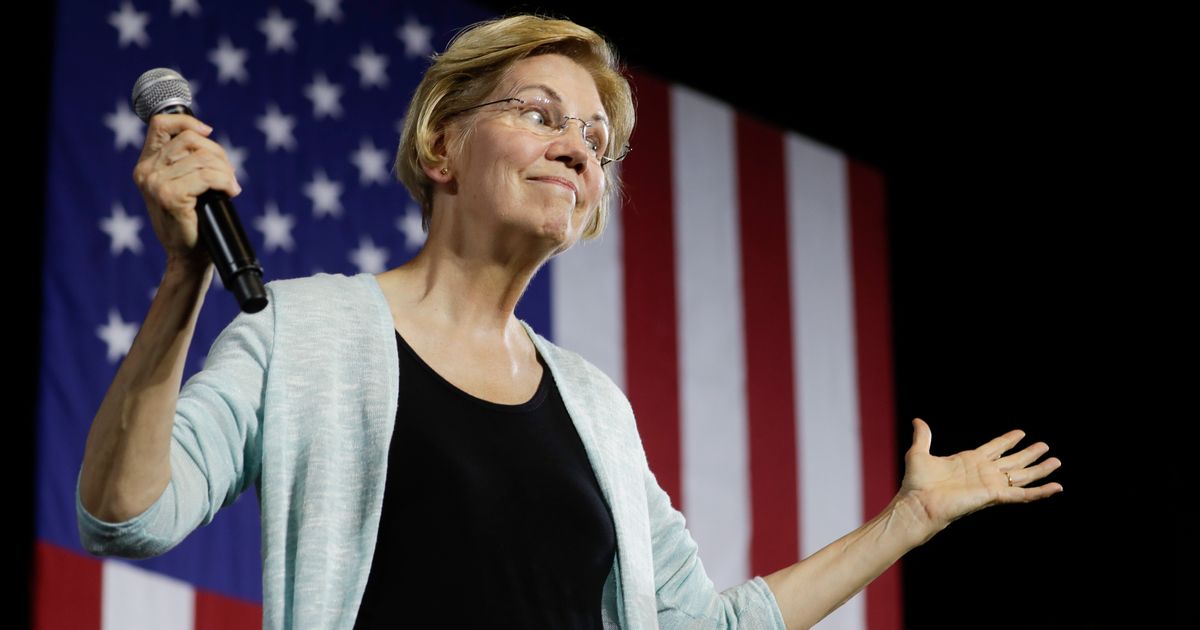
Elizabeth Warren said, “I know I’ve made mistakes. I am sorry for harm I have caused.”
by Rebecca Nagle
In 1836, Warren’s great-great-great-grandfather, a white man named William Marsh, enlisted himself in a Tennessee militia to fight in the “Cherokee War,” an occupation of Cherokee land in the lead-up to the Trail of Tears. Decades later, his grandson John Houston Crawford moved his family onto Indian Territory and squatted on Cherokee land in a move that, with no record of a permit, was almost certainly illegal.

The Crawfords settled in the new state of Oklahoma. They lived among Indians, but it wasn’t always peaceful. In 1906, John Crawford shot a Creek man for hitting his son. According to The Boston Globe, his son, Rosco, would later tell stories about how “mean” the Indians were. But one of Crawford’s grandchildren, Pauline Reed, told a very different story. Not a story of living among Indians, a story of being Indian.
Pauline’s youngest child, Elizabeth, grew up with her mother’s version of the story. It was her family story, she would say. The story of Warren‘s family traces the history of Cherokee Nation. Like many other white families, Warren’s ancestors replaced the truth of their complicity in Cherokee dispossession with a tale of being Cherokee. If that’s not wrong, if that’s not racist, I don’t know what is.
by Rebecca Nagle
In 1836, Warren’s great-great-great-grandfather, a white man named William Marsh, enlisted himself in a Tennessee militia to fight in the “Cherokee War,” an occupation of Cherokee land in the lead-up to the Trail of Tears. Decades later, his grandson John Houston Crawford moved his family onto Indian Territory and squatted on Cherokee land in a move that, with no record of a permit, was almost certainly illegal.
The Crawfords settled in the new state of Oklahoma. They lived among Indians, but it wasn’t always peaceful. In 1906, John Crawford shot a Creek man for hitting his son. According to The Boston Globe, his son, Rosco, would later tell stories about how “mean” the Indians were. But one of Crawford’s grandchildren, Pauline Reed, told a very different story. Not a story of living among Indians, a story of being Indian.
Pauline’s youngest child, Elizabeth, grew up with her mother’s version of the story. It was her family story, she would say. The story of Warren‘s family traces the history of Cherokee Nation. Like many other white families, Warren’s ancestors replaced the truth of their complicity in Cherokee dispossession with a tale of being Cherokee. If that’s not wrong, if that’s not racist, I don’t know what is.